


When Arm Movement Feels Limited
Parents often notice early if one arm moves differently than the other. A baby may keep one arm tucked close to the body, or an older child may struggle to lift, reach, or bear weight through one side. At EMpower, we support families navigating brachial plexus injuries in New York, NY through personalized in-home pediatric physical and occupational therapy. The brachial plexus is a network of nerves that carries signals from the spine to the shoulder, arm, and hand. When these nerves are stretched or injured, movement and strength in the arm can be affected.
Families often share concerns about delayed rolling, crawling, or reaching milestones. Some parents notice their child avoids using one arm during play. Others worry about long term strength or coordination differences. Most families want clear guidance about how to support recovery and encourage balanced movement at home.
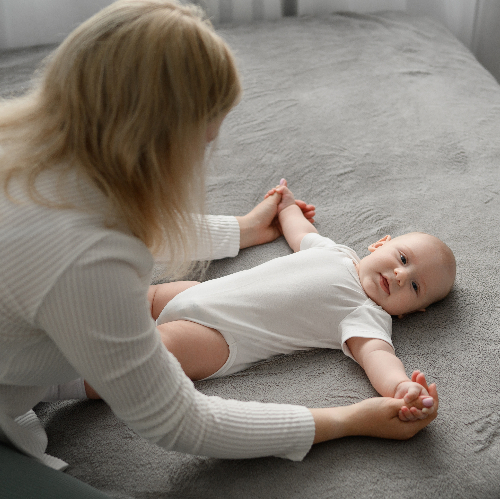
Understanding Causes and the Role of Early Support
Brachial plexus injuries most commonly occur during birth when the shoulder area experiences stretching as a baby passes through the birth canal. This type of injury is sometimes referred to as a brachial plexus birth injury (BPBI). In older children, brachial plexus injuries can occur due to falls, sports injuries, or accidents that place force on the shoulder and neck.
The severity of nerve involvement varies. Some children experience mild stretching that improves over time, while others may need longer term support. In-home pediatric therapy plays an important role in supporting nerve recovery, maintaining joint mobility, and encouraging muscle activation. Timely care helps prevent stiffness and supports symmetrical movement patterns. Therapy focuses on steady progress that supports functional use of the arm in everyday routines such as dressing, feeding, crawling, and play.
When therapy happens at home, children practice skills in natural positions and environments. This setting allows parents to learn safe handling techniques and positioning strategies that support recovery throughout the day.

Signs Families May Notice
Children with brachial plexus injuries may show:
- Limited movement in one arm
- Weakness in the shoulder, elbow, or hand
- Preference for using one side during play
- Difficulty lifting the arm overhead
- Reduced grip strength
- Stiffness in the shoulder or elbow
- Delayed motor milestones involving upper body strength
- Asymmetrical crawling or reaching patterns
An individualized evaluation helps determine how the injury affects daily function and what type of support may be helpful.
Encouraging Strength and Symmetry at Home
At EMpower, our therapists use in-home pediatric physical and occupational therapy as part of a personalized plan for brachial plexus injuries.
- Comprehensive upper extremity assessment identifies areas of weakness, limited motion, and compensatory patterns.
- Gentle range of motion exercises help maintain flexibility and prevent stiffness.
- Targeted strengthening activities support muscle activation in the shoulder, arm, and hand.
- Bilateral coordination tasks encourage use of both arms during play and daily routines.
- Functional task practice connects therapy goals to real activities such as dressing and feeding.
- Caregiver education and handling techniques provide families with safe strategies to support positioning and movement throughout the day.
In-home pediatric physical therapy works best when guided by an individual evaluation and adjusted as strength and control improve. Therapy plans remain flexible and responsive to each child’s progress.
Trusted by Families Across Our Community
What parents and caregivers say about working with EMpower

-

“Gentle Care, Big Results”
We loved working with Isabella! Her home visits were perfect for our 1-month-old, and she helped resolve his neck issues. She was flexible, attentive, and an absolute delight.
–
Elena B.
-
“From Tough Starts to Big Smiles”
Our daughter has made a ton of progress with Emily! She absolutely adores her and even though the first couple sessions were challenging for her, she acclimated and has been really enjoying her time with Emily!
–
Niklas V.
-
“Gentle, Knowledgeable, and Loved by Our Son”
Emily is an amazing child/infant PT! She is amazing with kids, gentle and so knowledgable. My son loved her, and now that he’s all better we will miss her!
–
Tracy D.


Care That Adapts to Your Child’s Needs
At EMpower, we meet each child where they are and build therapy plans around meaningful goals. Our therapists listen carefully to caregiver concerns and focus on practical strategies that fit naturally into daily routines. In-home pediatric physical and occupational therapy allows families to feel involved and informed throughout the process. We aim to support both recovery and confidence so children can participate more fully in play and daily activities.

Considering Support for Your Child’s Arm Development
If you have questions about brachial plexus injuries or concerns about your child’s arm movement, our team at EMpower can explain how personalized in-home pediatric physical and occupational therapy may support balanced strength and functional progress throughout New York, NY.