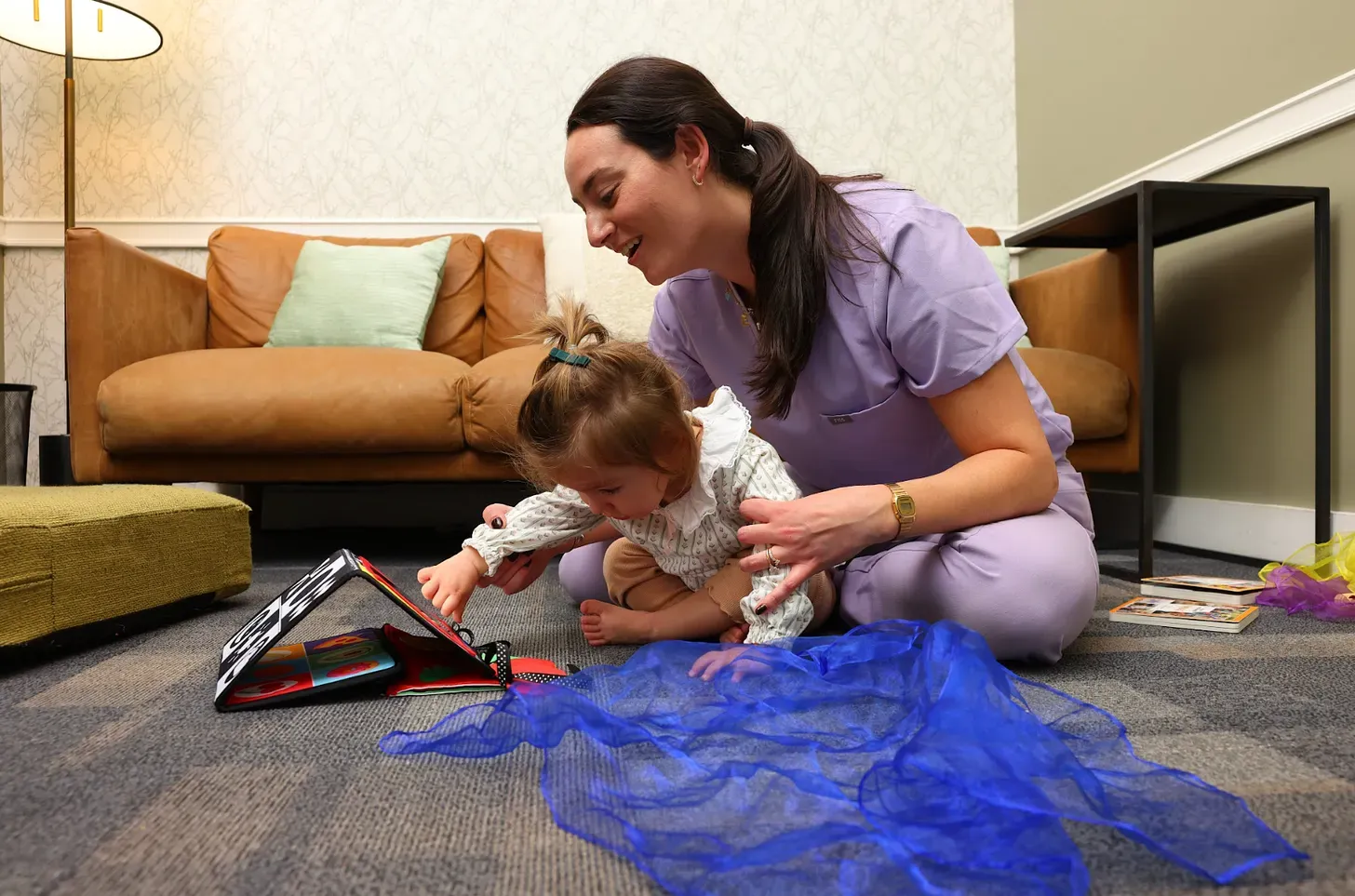
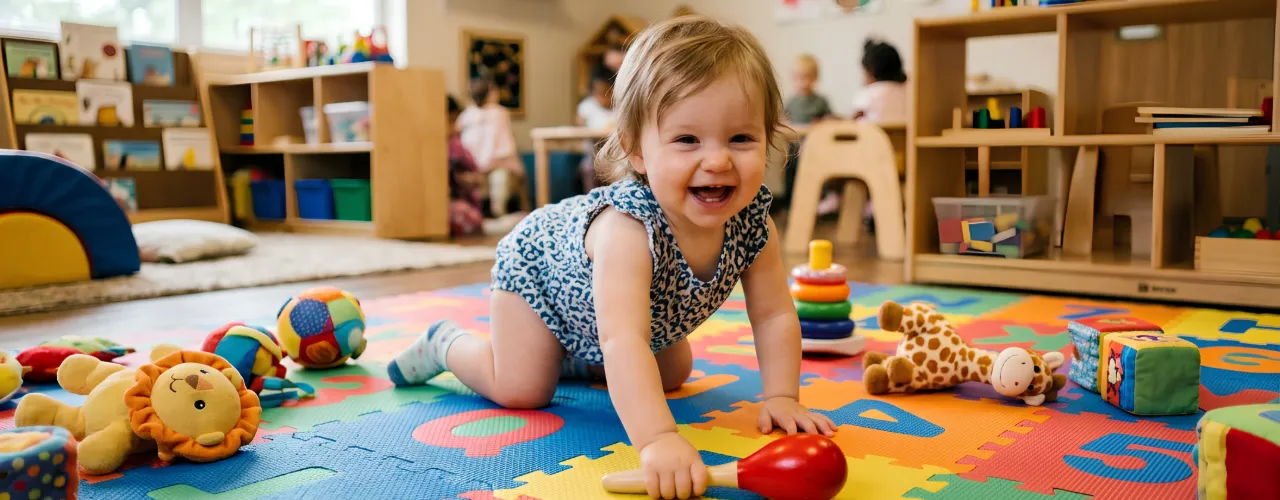

You’re scrolling through the pre-K enrollment checklist and see “motor readiness” and immediately think: My kid is literally always falling? But isn’t every 3-year-old always falling?
I chat with parents constantly about these milestones. Parents just like you ask me whether their child is ready for school, whether they should be concerned about a developmental gap, or simply whether what they’re seeing at home is “normal.” Here’s what we look for at EMpower PT, plus what you can actually observe (and practice!) at home.
What Does Their Gait Look Like?
Walking should be relatively easy for them at this point; however, some children pick up habits like toe walking, and some toddlers are still falling more than expected.
Gait Milestones (Ages 3–4)
- Line walking: 3–4 year old children should be able to walk in a line at school at a slow pace without falling.
- Mature heel-to-toe pattern: They should walk with a mature heel-to-toe pattern, and their early out-toeing or ankle pronation should be evened out by now.
- Progressive stability: They are likely still falling when trying something new or going too quickly, but they should be falling less and less as they get older.
Can They Climb the Stairs?
Stair climbing is one of my favorite early indicators of overall motor development because it’s functional, it’s something kids want to do, and it shows up in everyday life. Yes, I recognize that in NYC many of our kids don’t have stairs at home, but their school and playground almost certainly do have stairs.
Stair Milestones by Age
- At 3 years old (Ascending): We’re aiming for kids to go up the stairs without holding on, placing one foot on each step. This takes coordination, balance, and enough leg strength to lift their body weight up repeatedly. If your 3-year-old is still depending on the railing or skipping steps, that’s not unusual, but it’s something to practice.
- At 4 years old (Descending): We add the descending piece. Kids should be able to come down the stairs without support, again with one foot per step. Descending is actually harder than ascending because they have to control their descent rather than just propel upward. It requires more body awareness and confidence.
Pro tip: Practice matters here. A house without stairs? No problem. Use a sturdy step stool or even a low curb in your neighborhood. Make it a game, not a test.
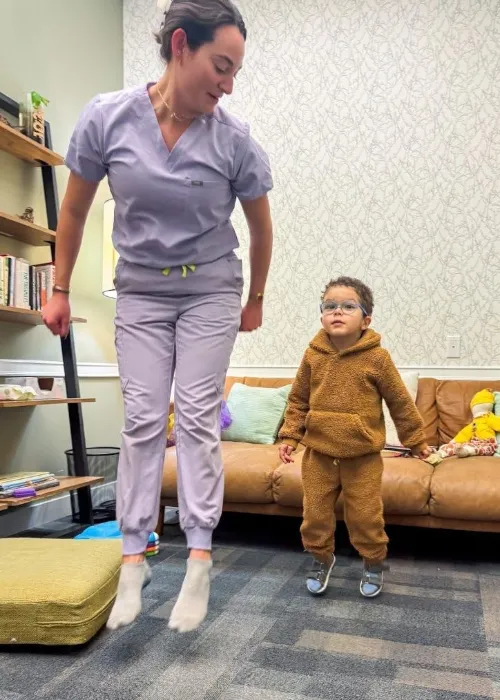
How Does Their Jumping Look?
It is so fun to watch kids learn to jump! Honestly, they get so excited.
At 3 Years Old
- Jumping off an 18-inch step (probably at the playground or maybe off the bottom step of the subway or emergency exit stairs).
- Jumping forward more than 24 inches, with a 2-foot takeoff and landing.
At 4 Years Old
- Jumping up off the ground about 3 inches.
- Jumping off a 24-inch step (again, probably at the playground).
The progression here shows vertical control and increasing body awareness. A 4-year-old should be confidently launching themselves at the playground.
The reality: If your 3-year-old can’t quite clear 24 inches forward yet, that’s okay. But if they’re not attempting to jump further or higher as they get older, it’s worth exploring with a professional.
How Is Their Balance?
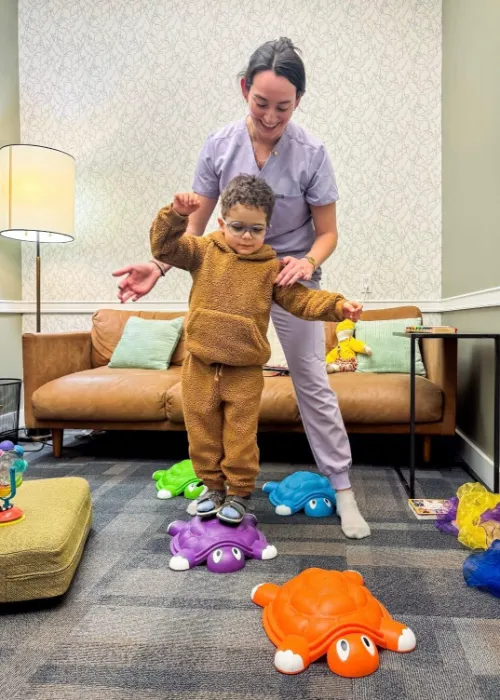
Balance is foundational for almost everything—walking on uneven ground, riding a bike, even sitting at a school desk with good posture.
- At 3 years old: Kids should be able to stand on one leg for about 3 seconds.
- At 4 years old: We expect 5 seconds on one leg.
My favorite pro tip: Ask your child to stand like a ballerina. Seriously. The visual cue of “being a dancer” helps kids focus and gives them something fun to do instead of just standing there awkwardly.
Remember: Every Kid Develops Differently
Here’s what I tell every parent who worries their child is “behind”: every child develops at their own pace, and these are guidelines, not hard rules. The most important thing is that they are making consistent progress. Be confident that you know your child best!
A child who’s not quite nailing stairs at 3.5 might be an amazing runner. Another might be cautious by temperament but completely capable. Development isn’t linear, and it’s not a single metric.
That said, if you’re noticing a significant gap, it’s worth getting a professional evaluation. Not to panic, but to understand what’s happening and what support might help.
What to Do If You’re Wondering
If any of these milestones feel off to you, or you’re just curious whether your child could use some targeted support, an in-home PT assessment is a great first step. We can watch how your child moves naturally, identify any gaps, and give you concrete activities to practice at home.
Ready to Get Started?
- 📧 Email: info@empowerpt.org
- 📱 Phone: (201) 591-5253
- 📷 Instagram: @_empowerpt_
Dr. Emily Schlicht, DPT, is the founder of EMpower PT, a concierge in-home pediatric physical therapy practice serving families in NYC. She specializes in motor development and helping families feel confident about their child’s physical readiness for big transitions.