


Understanding Spinal Curves in Growing Children
When a child is diagnosed with scoliosis, many parents feel unsure about what it means for daily life and long term movement. At EMpower, we support families navigating scoliosis in New York, NY through in-home pediatric physical therapy that focuses on posture, strength, and functional participation. Scoliosis refers to a three dimensional curve of the spine that can develop during growth.
Parents often notice uneven shoulders, shifting posture, or concerns raised during a school screening. Families commonly ask how scoliosis may affect sports, sitting tolerance, or long periods of standing. Many want to understand what they can do at home to support their child’s posture and confidence.
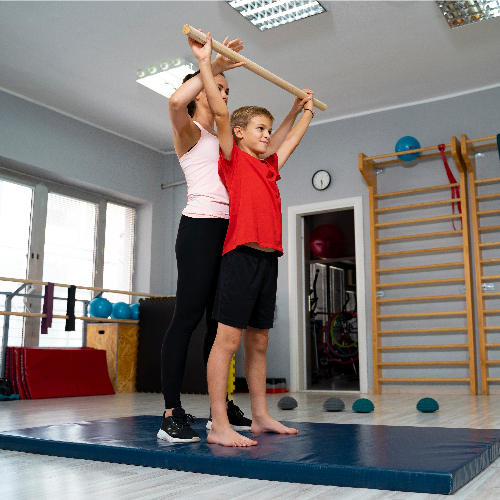
Why Early, Thoughtful Support Makes a Difference
Scoliosis can develop for several reasons. The most common type in children and adolescents is idiopathic scoliosis, which means the exact cause is unknown. Other forms may be related to neuromuscular conditions or congenital spinal differences present at birth. Growth spurts can make spinal curves more noticeable.
In-home pediatric therapy allows for family participation in care, which is vital to a lifelong diagnosis like scoliosis. When therapy happens at home, children practice alignment strategies while sitting at a desk, standing in the kitchen, or preparing for sports. Timely care supports muscular balance, postural awareness, and endurance. Rather than focusing on worst case scenarios, therapy focuses on steady progress and helping children feel strong and capable in their bodies.

Signs Families May Notice
Children with scoliosis may show:
- Uneven shoulders or hips
- One shoulder blade more prominent than the other
- A visible curve in the spine
- Clothing hanging unevenly
- Fatigue with prolonged sitting or standing
- Back discomfort after activity
- Changes in posture during growth spurts
- Reduced trunk strength or stability
Not every child experiences discomfort, but posture differences may influence balance and endurance.
A Targeted Approach to Alignment and Strength
At EMpower, therapists use Schroth-based principles within a personalized in-home pediatric physical therapy plan.
- Individualized postural assessment helps identify the specific curve pattern and areas of muscular imbalance.
- Schroth Method exercises focus on corrective positioning and breathing techniques that support improved spinal alignment.
- Core strengthening activities build trunk stability, which supports posture during daily tasks.
- Postural awareness training helps children recognize and adjust their alignment independently.
- Functional movement practice connects corrective strategies to real activities such as sitting at school or participating in sports.
- Caregiver education gives families clear cues and exercises they can reinforce between sessions.
These approaches work best when guided by individualized evaluation and are adjusted as children grow. Therapy supports strength and endurance while respecting each child’s developmental stage.
Trusted by Families Across Our Community
What parents and caregivers say about working with EMpower

-

“Gentle Care, Big Results”
We loved working with Isabella! Her home visits were perfect for our 1-month-old, and she helped resolve his neck issues. She was flexible, attentive, and an absolute delight.
–
Elena B.
-
“From Tough Starts to Big Smiles”
Our daughter has made a ton of progress with Emily! She absolutely adores her and even though the first couple sessions were challenging for her, she acclimated and has been really enjoying her time with Emily!
–
Niklas V.
-
“Gentle, Knowledgeable, and Loved by Our Son”
Emily is an amazing child/infant PT! She is amazing with kids, gentle and so knowledgable. My son loved her, and now that he’s all better we will miss her!
–
Tracy D.


Care That Meets Your Child Where They Are
At EMpower, therapy centers on meeting each child at their current level and building progress step by step. We listen carefully to family concerns and design plans that reflect real routines and goals. In-home pediatric physical therapy allows scoliosis exercises to integrate naturally into daily life rather than feeling separate from it. Families often share that this approach helps children feel more confident and engaged in their own progress.

Considering Support During Growth
If your child has recently been diagnosed with scoliosis or you have questions about posture changes, it may help to explore how personalized in-home pediatric physical therapy using the Schroth Method can support strength, alignment, and confidence throughout New York, NY.